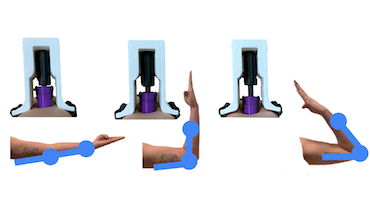
Wearable Sensory Substitution of Proprioception via Deep Pressure Haptics
I developed a novel sensory prosthesis to assist individuals with proprioceptive deficits via haptic sensory substitution. Firmware code is open-source and can be found here.

I completed my Ph.D. in electrical engineering at Stanford University where I collaborated with the National Institutes of Health (NIH) to characterize touch perception and develop wearable sensory prostheses. My rigorous technical training and interdisciplinary research experience uniquely enable me to tackle challenging, multidisciplinary problems. I’m interested in a broad range of topics including health applications, wearable / embedded systems, public interest technology, medical devices, firmware development, hardware-software co-design, perception, human factors design, UX, assistive technology, IoT and AI-powered devices, open-source development, reconfigurable hardware, ASIC and SoC design, robotics, technology policy, STEM education, community co-design, sustainability, fashion, politics, & film.


I developed a novel sensory prosthesis to assist individuals with proprioceptive deficits via haptic sensory substitution. Firmware code is open-source and can be found here.
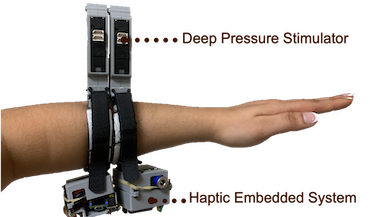
I led JND psychophysical studies of pressure perception to inform specifications for future prosthesis. The publication will be released soon.
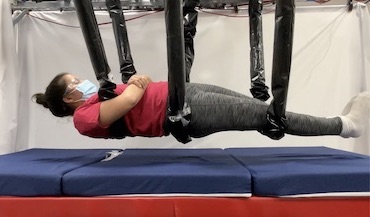
I designed and built a high-voltage power system and distributed BLE network for controlling a soft robotics bed transfer system. This work is published in Science Advances.
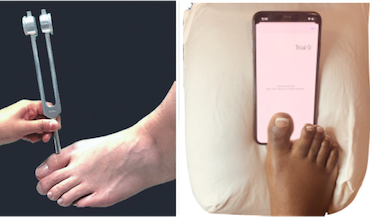
I collected perception and neuropathy data of older participants with standard medical tools and a novel haptic smartphone application to evaluate the viability of smartphones as diagnostic tools.
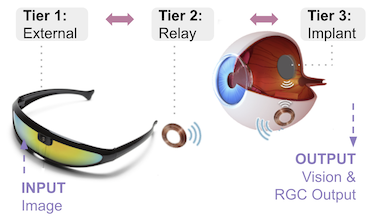
I evaluated the design space across algorithms, architectures, & biological degrees of freedom for a deeply embedded epiretinal system for vision restoration.
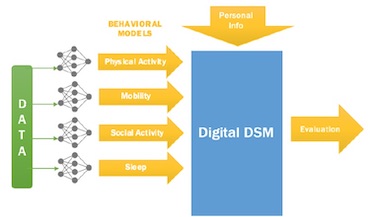
I created a low-power PHQ-9 (depression score) embedded AI model based upon mobile phone sensing data.
I developed embedded neural network model and deployed a real-time human activity recognition system with a neural network accelerator and mobile iOS application. IEEE ICCD publication can be found here.
I interfaced novel capacitive sensors and built a 3-D gesture tool for an iPad. I created an iOS app, gesture recognition algorithms, & the capacitive sensor-iPad BLE interface.
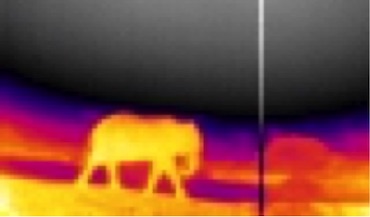
I developed a quadcopter drone and portable thermal camera unit with a Raspberry Pi to collect thermal images of animals for poaching prevention.
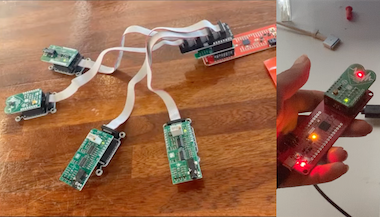
As the lead designer in a theater dept. collaboration, I designed a wearable system to measure and display biological signals of a performer in real-time to augment performance. I mentored undergrad and high school students to implement the system.
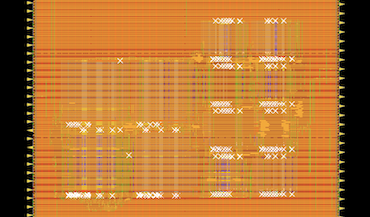
Final Project in Stanford EE272: I utilized industry EDA tools to created mixed-signal VLSI design. High level synthesis, synthesis, place and route, and layout
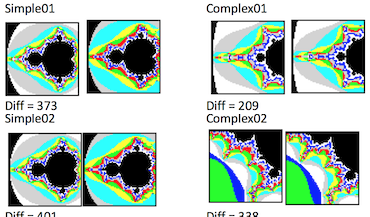
Final Project in Stanford EE 382a: I programmed synchronous and asynchronous generation on Kestrel, a Single Instruction Multiple Data (SIMD) parallel processor.
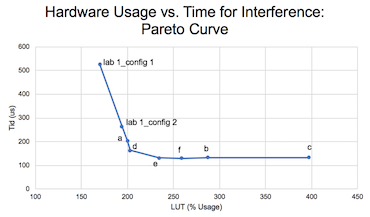
Final Project in Stanford EE292d: I evaluated the design space of architectures for CIFAR-10 convolutional neural network, synthesized designs via HLS, and evaluated performance on a FPGA.
Final Project for Princeton ELE 302: Created two collaborative micro-robots to capture colored “villain” blocks using custom-built chasses, Raspberry Pis, Pixy Camera, image processing, and vehicle-to-vehicle server communication.
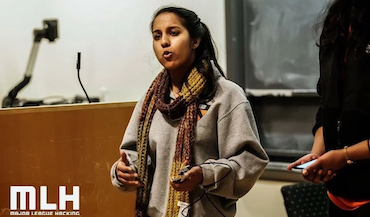
Led all-women team to create an IoT protection system with wearables and smartphone for DV/SV prevention. Improved the system with machine learning model
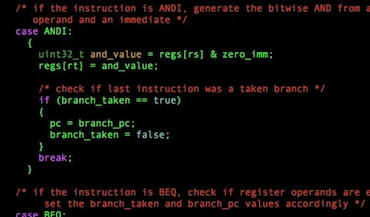
Final Project for Princeton COS375: Implemented 5-stage pipeline simulation in C# of a cycle-accurate MIPS instruction set architecture with caching.
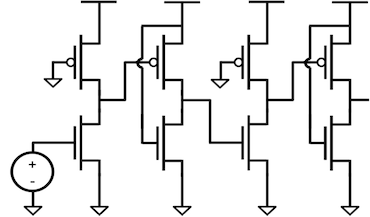
Final Project for Princeton ELE462: Designed and simulated novel low power temperature switch using cascading sub-threshold MOSFETs with Cadence Virtuoso.
Final Project for Princeton ELE 203: Built ECG with cascading instrumentation and variable gain amplifiers, bandpass and notch filters, and visualization circuit.
In a high school side project, I combined my interests in classic dance and electrical engineering by mapping footwork patterns (called baant) to different letters.
Please reach out with any inquiries on project ideas, collaborations, job roles, and/or outreach opportunities.